The concept
Three ways to put an AI model to work:
- Chatbot: you ask, it answers. One question, one reply, often grounded in documents with RAG (Day 31). It doesn't take actions.
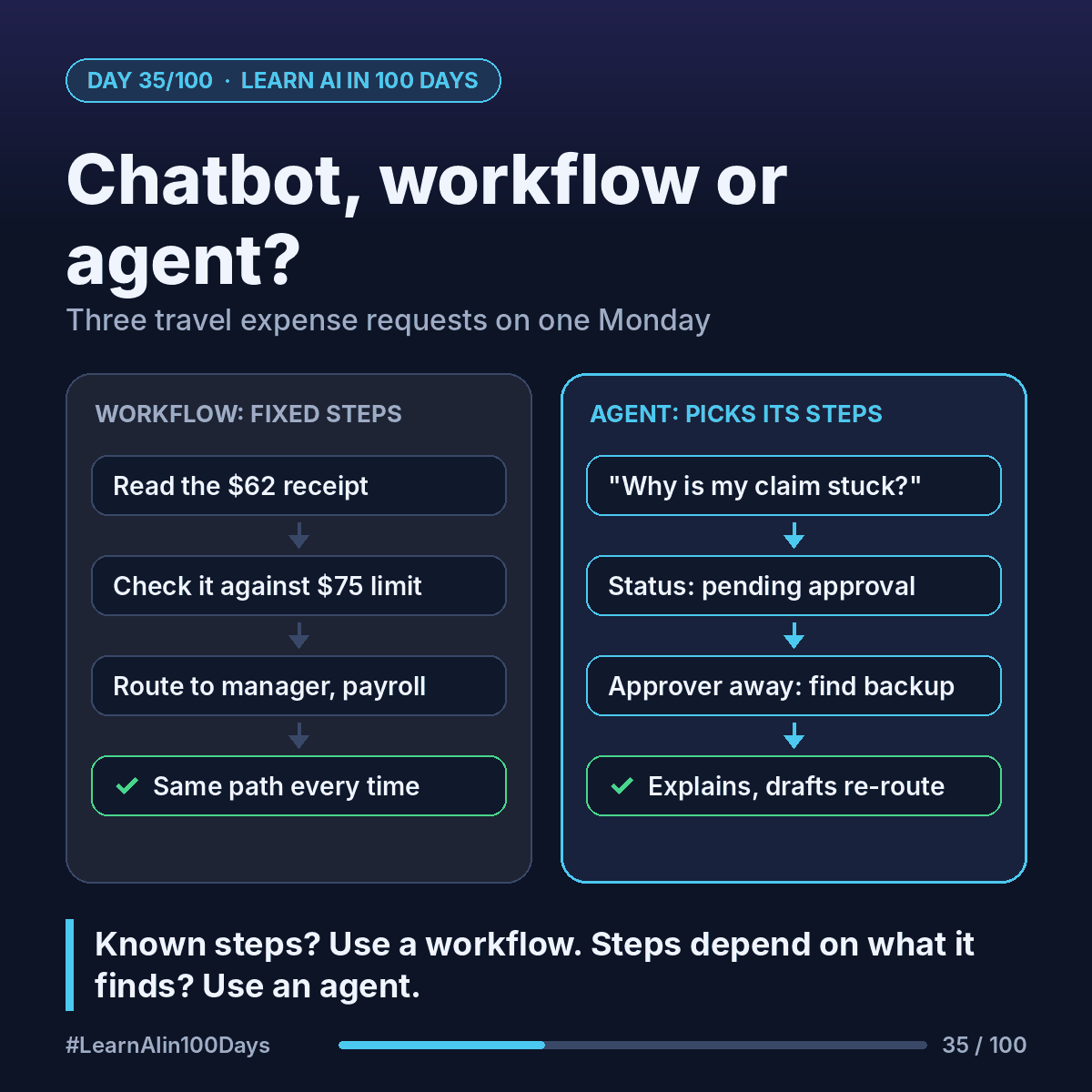
- Workflow: a fixed path that people designed in advance. The AI does some steps (read a receipt, classify it), but code decides what happens next. Same input, same route, every time.
- Agent: you give it a goal and some tools. The model decides which step to take, looks at the result, and decides the next one, until the goal is met or it hands off to a person.
More freedom = more flexibility, but also more cost, less predictability and more testing.
Walkthrough: travel expense reimbursement
Imagine the finance team at a mid-size company, three requests on one Monday.
1. Chatbot: "What's the meal limit for a client dinner?"
- It retrieves the travel policy and replies: say, "$75 per person, receipt required. Source: Travel Policy, section 3."
- Done. Nothing in any system changed.
2. Workflow: an employee submits a $62 dinner receipt.
- Step 1: AI reads the photo and pulls out date, vendor and amount (Day 26, Day 27).
- Step 2: code checks $62 against the $75 limit. Pass.
- Step 3: route to the manager for approval, then to payroll.
- Every claim follows the same three steps. Easy to audit, easy to test.
3. Agent: "My reimbursement from three weeks ago is stuck. Why?"
- No fixed script fits this. The agent decides to look up the claim: status "pending approval".
- It checks the approver: that manager is on leave.
- It checks the policy for a backup approver and finds one.
- It tells the employee what happened and drafts a re-route request for a person to confirm.
Notice: the agent chose its steps based on what it found. The workflow never would.
Where you see it at work
- Banking: chatbots for product FAQs, workflows for account opening, agents for investigating an unusual dispute.
- Insurance: a workflow routes simple claims; an agent helps an adjuster dig into a messy one.
- Business analysts: if you can draw the process as a flowchart, start with a workflow. Use an agent only where the path can't be drawn in advance.
In one sentence
Use a chatbot to answer, a workflow when the steps are known, and an agent only when the steps depend on what it discovers along the way.