The concept
There are three main ways a machine learns:
- Supervised learning: you give examples WITH the right answers (labels). The model learns to predict the answer for new examples. Like studying with an answer key.
- Unsupervised learning: you give examples WITHOUT answers. The model finds groups or patterns on its own. Like sorting a pile of photos into piles without being told the categories.
- Reinforcement learning: the model takes actions, gets rewards or penalties, and learns which actions pay off over time. Like training a dog with treats.
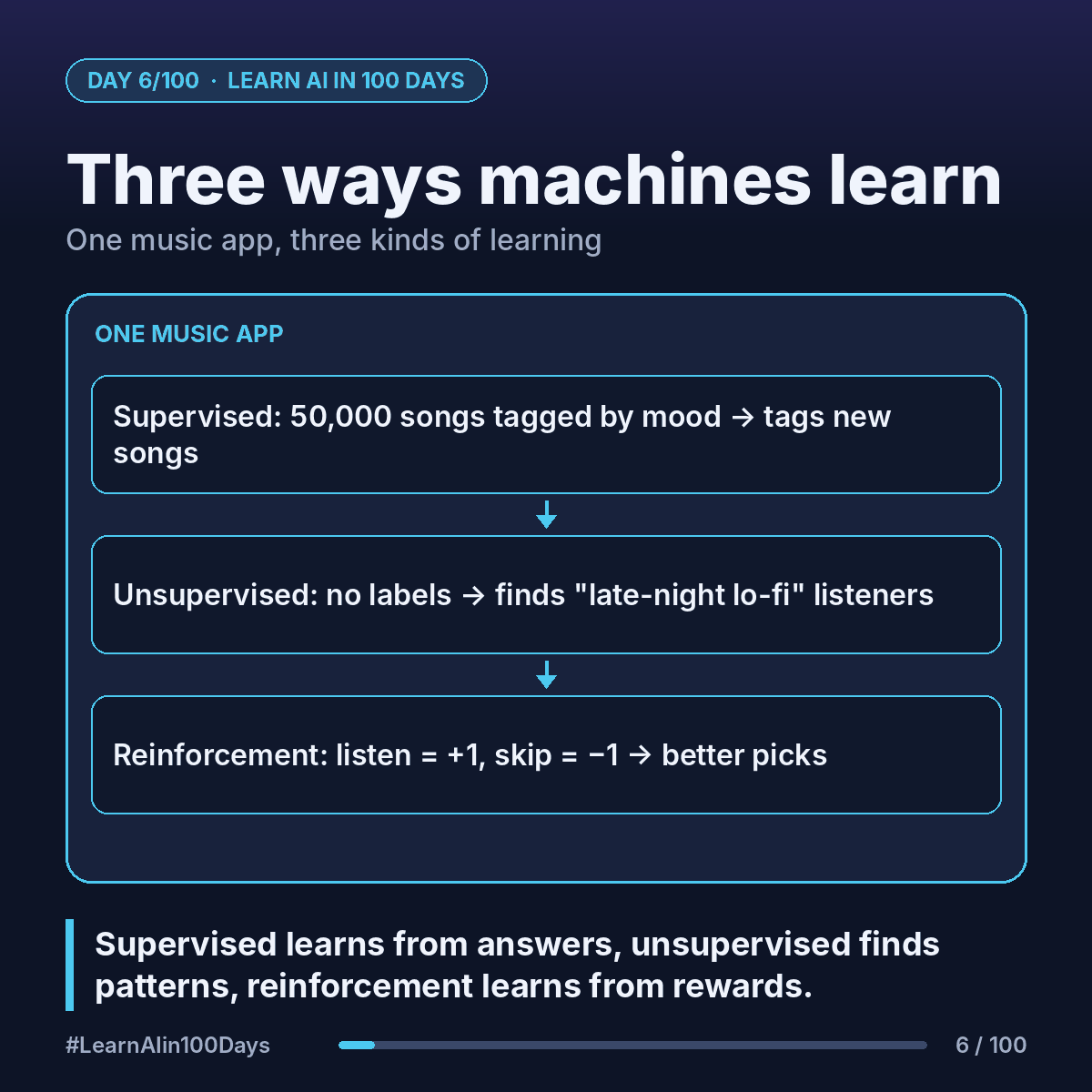
Walkthrough: one music app, three kinds of learning
1) Supervised: tagging songs by mood
- 50,000 songs already tagged by people as "calm" or "energetic."
- Features: tempo, loudness, instruments.
- The model learns the link. A new song at 150 beats per minute with loud drums → "energetic."
2) Unsupervised: finding listener groups
- 2 million listeners, no labels at all.
- Features: what they play, when, for how long.
- The model groups similar listeners. It might find a cluster that plays lo-fi at 11 PM on weeknights. Nobody told it "late-night studiers" exist; a human names the group afterward.
3) Reinforcement: picking the next song
- The app picks a song. You listen to the end: reward +1. You skip after 5 seconds: penalty −1.
- Over millions of picks, it learns which choices keep people listening.
- No answer key, just feedback on its own actions.
Quick way to tell them apart:
- Have the right answers? Supervised.
- No answers, want to discover structure? Unsupervised.
- Making a series of decisions with feedback? Reinforcement.
Where you see it at work
- Banking (supervised): approve or decline, learned from past loans with known outcomes.
- Retail (unsupervised): customer segments for marketing, found from purchase history.
- Insurance (unsupervised): spotting unusual claims that don't fit any normal pattern.
- Operations (reinforcement): systems that tune decisions like pricing or routing from results.
Bonus: the chat assistants you use blend these ideas. They first learn patterns from huge amounts of text, then get refined using human ratings (a form of reinforcement learning). More on Day 19.
In one sentence
Supervised learns from answers, unsupervised finds patterns without answers, and reinforcement learns from rewards for its own actions.